
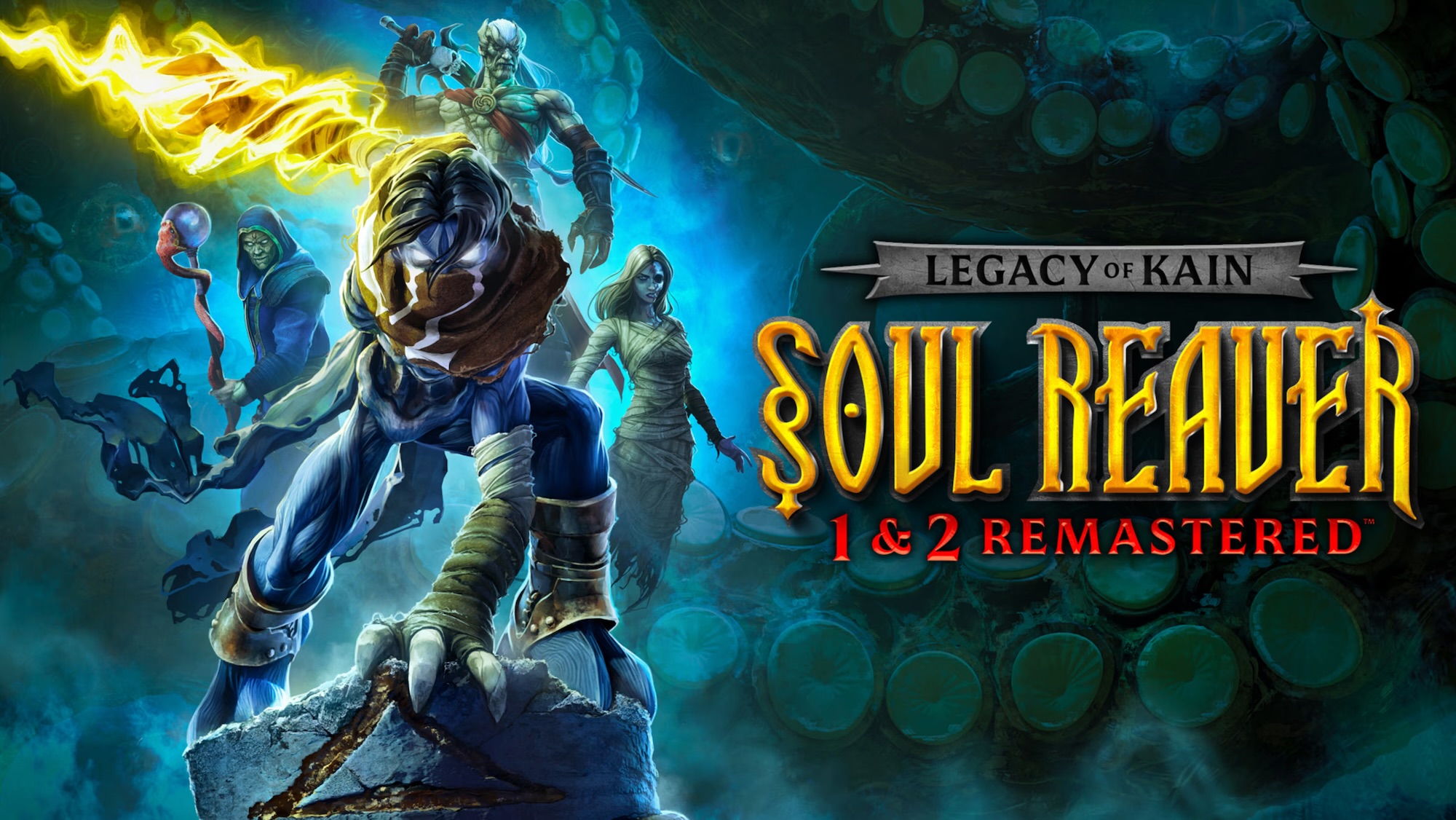
In the early days of the PlayStation, there was a game that caught my eye. Blood Omen: Legacy of Kain put you in the shoes of a vampire by the name of Kain on a quest for revenge. It was an intriguing game at the time for not many titles put the player in control of a vampire. Usually they’re the bad guy. And if a game did it was something like Monster in my Pocket or Kid Dracula which had a distinctly different vibe from something like Blood Omen. The only problem with the game at the time is that it was just a brutal slog on the PlayStation. Not that the PC version was much better, but the CD ROM format just wasn’t quite ready for a game like Blood Omen as the loading times were tough to manage even in an era where websites took minutes to load as opposed to seconds. It was a game that didn’t get much run from me, but its sequel? That enchanted me from day one.
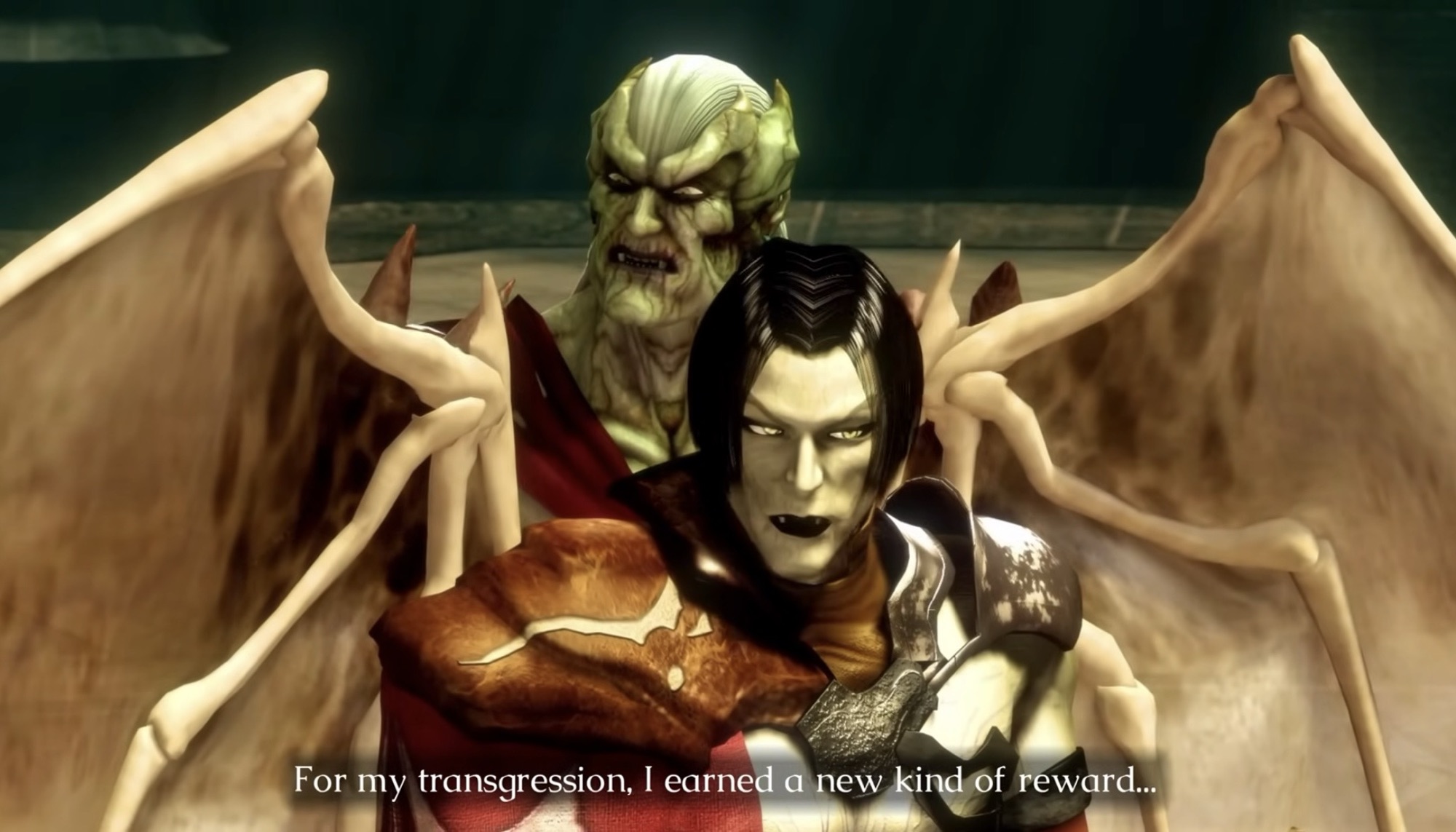
Legacy of Kain: Soul Reaver is set some time after the events of Blood Omen. Kain (Simon Templeman) is no longer a newly born vampire seeking a cure to his vampirism, but is an established vampire lord with his own thralls of vampire servants. Among them is Raziel (Michael Bell), Kain’s favored son, until one day Raziel appears before his father with a new set of wings. It seems vampires evolve in unique ways and at different rates, but since Kain did not have wings of his own, he apparently took Raziel’s evolution as an insult so he tore the wings apart and cast him into the abyss to die. Nice guy. Only Raziel didn’t quite die. Revived by the disembodied Elder God (Tony Jay), Raziel finds himself transformed into a wraith-like being. His flesh is scarred and tinted-blue, his lower jaw is gone, and all that remains of those once glorious wings are tattered pieces of leathery flesh. Raziel does not take kind to his new appearance and hungers for revenge. Revenge against Kain for what he did to him, but also revenge against his brothers who stood by or even assisted in his demise.
Unlike Blood Omen, Soul Reaver is a fully 3D platformer where the player is able to explore the fictional world of Nosgoth in control of Raziel. It’s a bit like a 3D Metroidvania, though it also borrows from titles like The Legend of Zelda. Raziel begins the game with only his claws to fight with and a special ability that allows him to cross between the material realm and the spectral one. As the player progresses through the game, Raziel will gain new powers and abilities that unlock new areas to explore and new enemies to conquer. Unlike a Zelda game, those new powers are most often unlocked by defeating one of Raziel’s brothers as opposed to acquiring said power during exploration of a dungeon. Whenever Raziel defeats an enemy, he is able to consume their soul and consuming the soul of an elder vampire has some real perks to it. Raziel begins the game lightly outfitted, but he’ll gain the ability to pass through barriers, climb walls, and even conquer his aversion to water. He’ll also acquire the titular Soul Reaver, the blade wielded by his former master reduced into a spectral form that’s always at his side. Well, until he takes a hit then it goes away until he can regain full health.
Along his journey, Raziel will encounter a small variety of enemies most of which are vampiric. Killing a vampire requires specifics and they can only be vanquished with sunlight, fire, water, or by piercing their heart. Across Nosgoth the player will find various weapons to make use of. Many of these are some form of polearm that Raziel can swing like a staff and then impale his foes upon once they’ve been sufficiently dazed. Rocks and clubs can only stun vampiric enemies while a lit torch can set them ablaze, though it then needs a heat source to be reignited. Dazed enemies can also be picked up and thrown allowing Raziel to finish them off by tossing them into a lit area, water, or my personal favorite, onto ornamental spikes you may find throughout the environment. Once an enemy is slain, Raziel only has a few precious seconds to consume their soul and attempting to do so leaves him open to attack if more enemies are present. If the soul is consumed, the vampire disintegrates and Raziel regains some health. If the soul escapes, the corpse could be revived quickly. Regardless of what the player does, enemies respawn quite liberally if an area is left and then returned to so it can feel like a bit of a waste of time when just passing through to deal with enemies if they’re not directly in one’s path. The actual combat is fairly simple, though impaling foes never loses its charm. The Soul Reaver is a weapon Raziel will always have after a certain point in the game so long as he has full health which helps. It also has a bonus function of preventing Raziel from losing health when in the material world as ordinarily his physical form slowly deteriorates.
If Raziel suffers too much damage and is reduced to no health he doesn’t die, but is instead returned to the spectral realm. The spectral realm is another version of the “real world” only objects cannot be interacted with nor do they possess form, in some instances. There are still surfaces to walk on and Raziel can grab onto a ledge, but water has no density and Raziel can pass through it like air. Within the spectral realm is usually an abundance of lost souls and minor enemies for Raziel to feast upon and regain his health and once full he can return to the material realm, but only via specific waypoints. This is a key component to the puzzle nature of Soul Reaver as few areas require feats of conquest where enemies are concerned and instead turn into large puzzles that the player has to untangle. Once Raziel gains the ability to pass through fencing, many locations will make use of that as Raziel can only use that ability in the spectral realm. Often, if the player runs into a dead end jumping to the spectral realm can reveal a way to press on, not just because there are barriers Raziel can phase through, but also because the spectral realm has a tendency to twist and distort what’s present in the material realm so a ledge that was once out of reach may no longer be. A frequent trick of the game is to present the player with a block puzzle. A block puzzle involves the player having to move a massive block(s) of some kind across an area and into a slot. Sometimes it’s done to create a mural or join pipes or simply as something that needs to be stacked so the player can reach a higher ledge. These puzzles were frequently cited as a point of contention because they are a bit plodding, but the criticism was overblown. At least as far as the main campaign goes.
Like many games, Soul Reaver has areas that need to be completed in order to progress through the game while some areas are strictly for those looking to do everything. Raziel will only learn one spell by default, the ability to go between realms, but there are numerous others available via glyphs. These are only accessible once Raziel acquires new abilities and are strictly optional. Most are just area of effect spells useful for dealing with common enemies and many are attuned to certain vampiric weaknesses. There’s also an upgrade for the Soul Reaver to find as well as objects that increase Raziel’s max health when in the material world. Acquiring these will task you with more of those dreaded block puzzles including the biggest one of the game so if you don’t like them you may not want to seek these upgrades out. For my original playthrough back in 1999, I did everything, but for my most recent run I only grabbed the stuff I knew I wanted. The expanded glyphs are not particularly useful nor is the game hard enough to require the player to seek out all of the health upgrades.
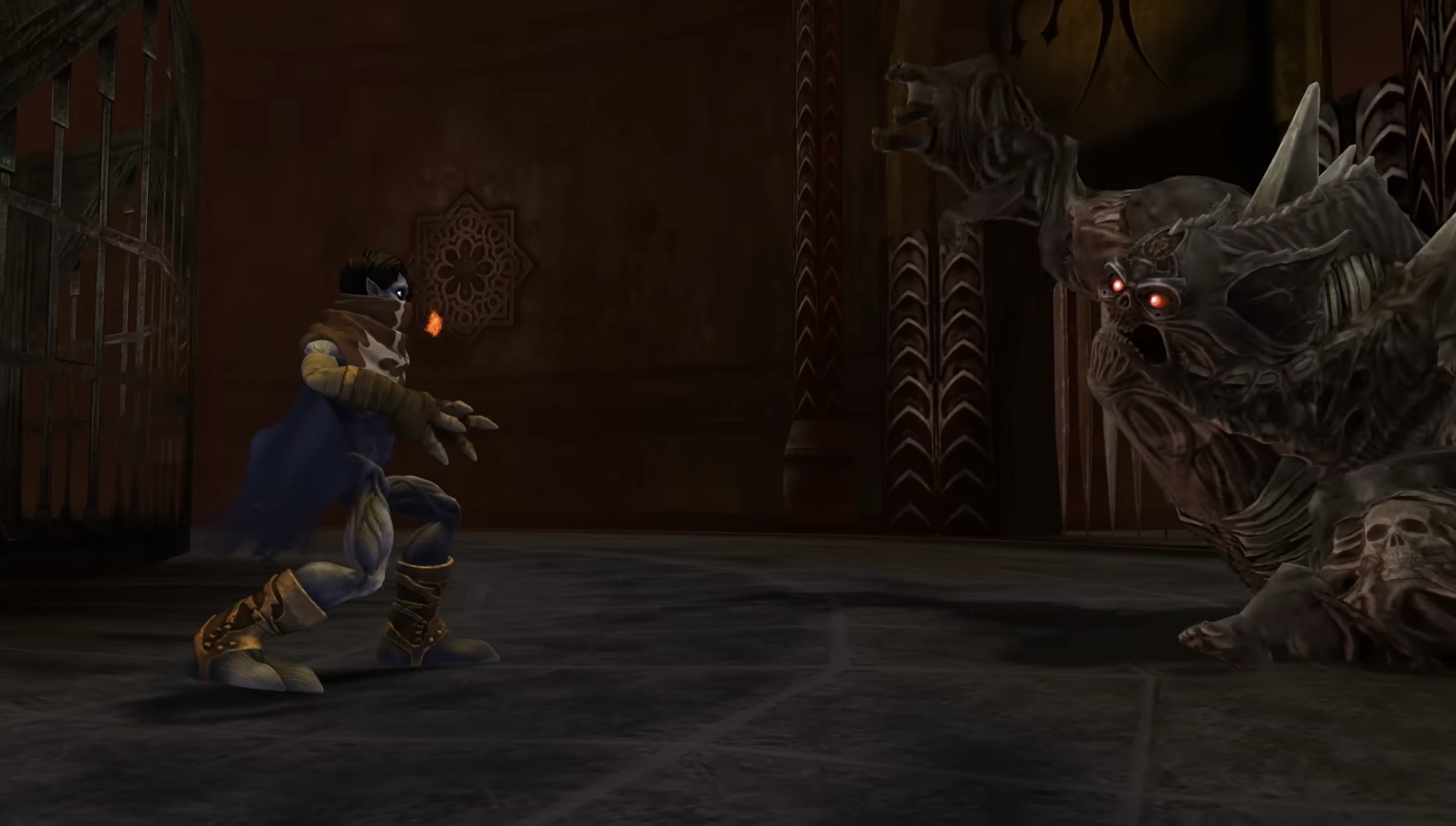
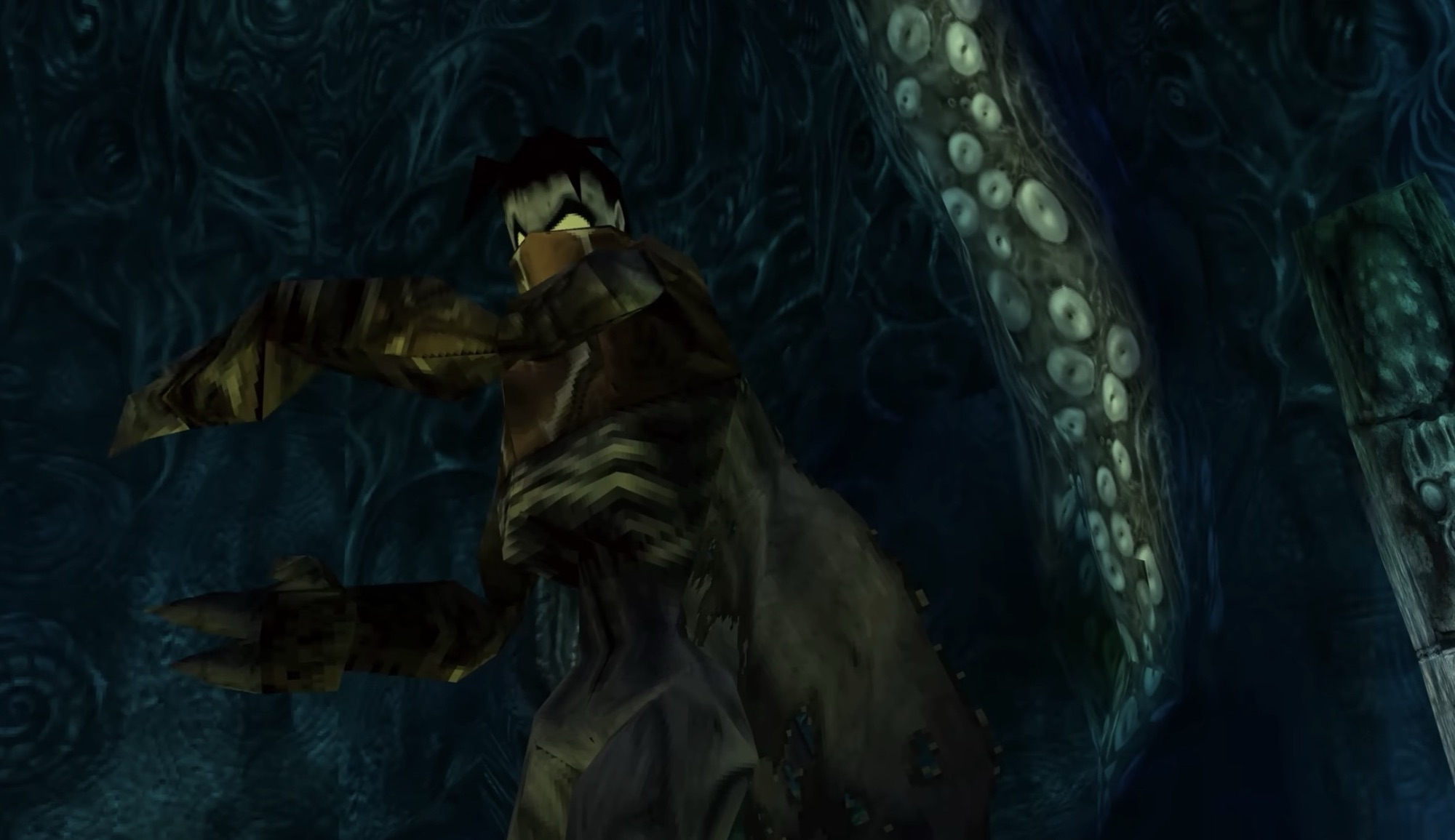
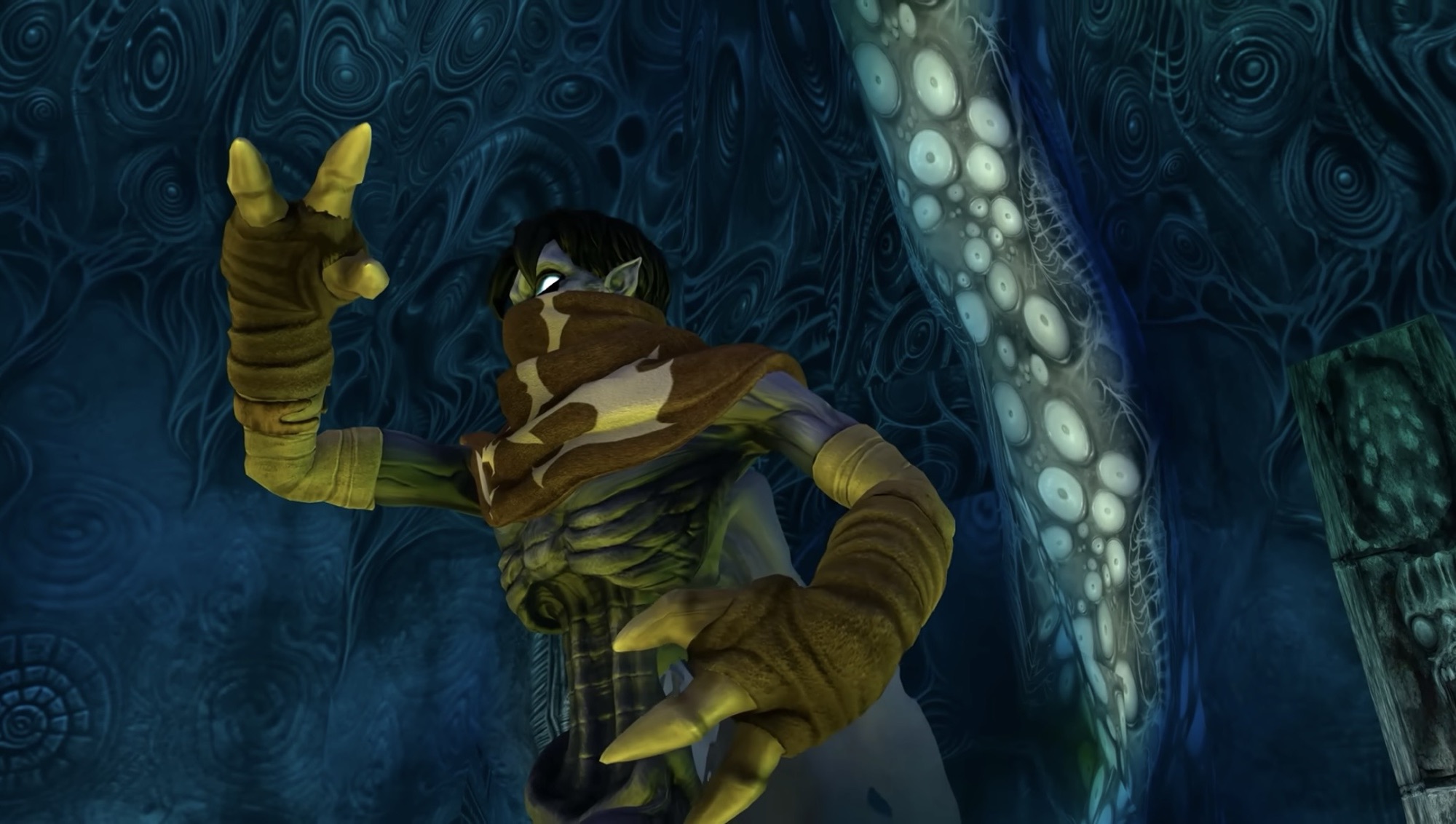
When I played this game in ’99 I loved it. It was a little short which was my main critique as I was able to beat it in a rental (I did eventually buy it cheap for the Dreamcast), but I was in love with the lore and overall vibe of the game. As a 2024 experience when the remaster was released, it’s a little harder to love. The game looked very good on the PlayStation for its time and I honestly think it’s held up pretty well in that regard. In the remaster, you can toggle between the original game’s assets and the upgraded visuals by clicking the right thumbstick and they do present better. My guess is they imported some of the sequel’s assets into the first game, but also the boss characters and enemies received an upgrade. Most apparent is now their mouths move when they speak. And the gothic music and the voice acting is still pretty top notch. I think Soul Reaver is the first game I played where the voice acting was truly an asset (it was either this or Metal Gear Solid). Most video games at the time were either terrible or passable when it came to voice acting, but this was a professional job and a lot of the heavy lifting is credited to voice of Raziel Michael Bell. My only real critique with the presentation is just that it’s so dark. There’s no toggle in the game to increase the brightness and there were areas where I felt like I was going through them blindfolded. I just personally hate that and I also hate having to mess with my television’s settings.
What doesn’t hold up as well is the platforming. Raziel is given a few tools to traverse the world. He can do a standing high jump, grab ledges to extend his leaps, and use what remains of his wings to glide. The camera is quite loose, but also has a tendency to get in too close in certain areas. The camera can be manually controlled with the right stick, but there are times when it will frustrate. The game also tasks the player with making several tricky jumps with almost no margin for error in some cases. And the punishment for missing said jump can cost minutes as you trek your way back to the spot of your failure. There is one sequence in the game’s water temple (water temples should be outlawed from gaming) that I had to keep trying at where Raziel has to cross a series of beams to reach one ledge and then another set of similarly small ledges. All before overcoming his aversion to water so failing means switching back to the spectral realm when he plunges into the waters below. It had me incredibly frustrated and there are areas of similar difficulty, though none that irritated me as much as that. Raziel controls with little weight to his movements making his jumps feel floaty and the challenge is, once he lands, to not run off the ledge. When it’s an especially long one, I found it best to be stationary and use the character’s standing high jump and then glide. In some cases, that worked and Raziel would grab the ledge to haul himself up. At least in one area, that doesn’t work and you need to just jump as far as the game will allow and hope for the best.
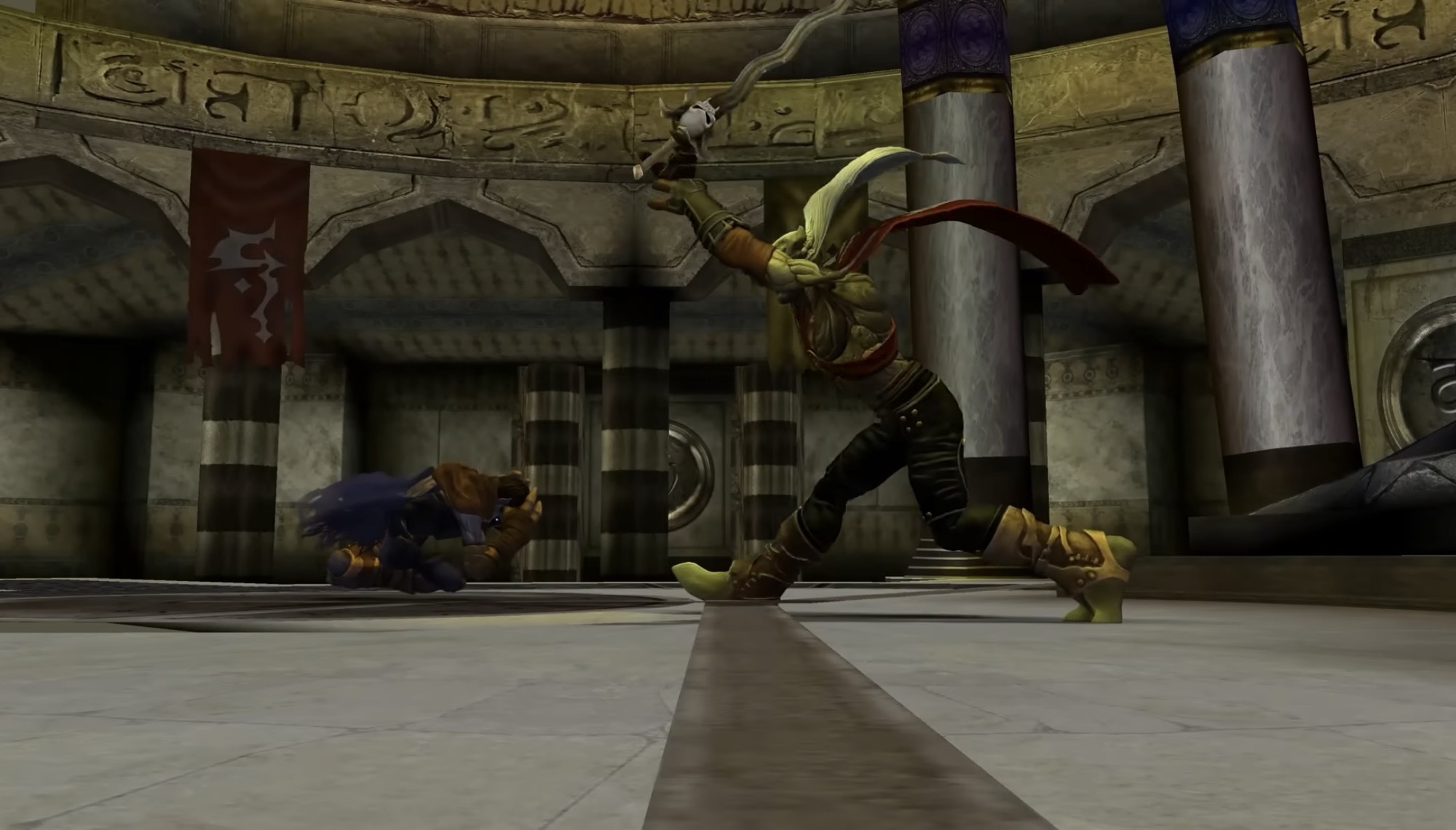
Another aspect of the game not as enjoyable on a replay are the boss encounters. Since the game is more of a mental challenge than anything, each boss fight requires the player to use the environment to their advantage. That means that once the problem is solved it ceases to be a challenge. The only exception are the two confrontations with Kain himself. There really isn’t much to either encounter – get up close and whack him, rinse and repeat. It was a criticism of the game then and it remains one now. There just is no satisfactory encounter with Kain and the game ends on an abrupt cliffhanger. It was said at the time that a lot of content had to be cut including a third fight with Kain. I don’t necessarily think a third was needed, they just needed to do something clever with the final battle and they kind of phoned it in. The cliffhanger ending was a bit of a bummer though because the narrative component is clearly a strength with the title. People seemed to genuinely enjoy the game’s story and to not get much of an ending did feel a bit like a betrayal at the time and still does. Fortunately now, if you do get the remastered version it comes with Soul Reaver 2, a game I did own once upon a time, but only played through one time and have very little memory of it.
Legacy of Kain: Soul Reaver was one of my favorite games of all time when I first played it back in 1999. It’s not really that anymore, but there’s still a lot here to love. The game is just a bit clunky feeling and there’s certainly diminishing returns when it comes to the game’s puzzle elements, even with having not played it in over 20 years. The good news is that this remastered collection was a mere $20 and includes two games. My non complete playthrough took me around 9 hours and that felt just about right. I could go back and seek out the glyphs I passed up, but 9 hours in this world feels like plenty and since nothing carries over to the sequel I’d rather just jump into that one. I don’t speed through games like I did when I was younger so who knows when that review will go up. In the little I’ve played so far, I’ve found the darkness issue to be an even bigger one with the sequel. I played through the first temple where Raziel acquires the dark affinity for the Soul Reaver and found some of the sections leading up to it absolutely miserable. I did try the game on the PlayStation Portal briefly and that seemed a whole bunch brighter so maybe that’s my solution, but I haven’t gone back to it. Time will tell if I do see it through, and if I do, I’ll be sure to share my complete opinion right here on The Nostalgia Spot.
I don’t have much vampire content, but I do have some:

Dec. 21 – Count Duckula – “A Christmas Quacker”
In the 1980s, Nickelodeon didn’t have a lot of animated content. That’s probably surprising for today’s adolescents, but that’s how the network was in the old days. That was due in large part to the network first prioritizing educational content, and then wanting to make sure whatever it aired couldn’t be found on another channel.…
Keep reading
Super 7 Ghost Ultimates! Papa V Perpetua
Ghost remains the most unlikely mainstream rock act I can recall in recent times. A Satanic metal act that sells out arenas in the United States is not something I ever expected to see in my lifetime. It was basically the joke in a show like Metalocalypse – a “Can you imagine if such a…
Keep reading
Dec. 18 – Little Dracula – “The Bite Before Christmas”
There was a huge demand for cartoons in the early 90s. Cable was expanding and needed content for all ages while a new broadcast network was also making noise. That network was Fox, and after scoring primetime hits with Married…with Children and The Simpsons, the network started to look at other areas where it could…
Keep reading
