Tag Archives: sega

The Complicated Legacy of Sonic the Hedgehog

Unknown-35

If you were playing video games in the early 90’s you’ll know that finger wag from a mile away.

When it comes to video game characters, the most popular one of all-time isn’t up for debate. That would be Mario, the man of many occupations who first thwarted the mighty Donkey Kong to save his love (or was a pusher of animal cruelty depending on your point of view). Mario is a character that passes the grandparent test, which is, even your grandparents know who he is. For a time though in the early 90’s, a character rose up to rival Mario’s popularity and may have even eclipsed it for a brief moment. That character is Sonic is the Hedgehog, the mascot for the Sega company who’s responsible for putting a Sega Genesis into the homes of more Americans than the Super Nintendo.

Sonic was a hit, and he always was supposed to be. Look up how a character is created and you likely won’t find a more formulaic character than Sonic. He epitomized 90’s “edge” and “cool” and kids were supposed to love him and think he’s way cooler (way past cooler?) than that pudgy plumber on the other guy’s console. He starred in his own gaming franchise and made the leap to television and basically soared through the first half of the 90’s, but sadly his popularity would not last.

The original Sonic the Hedgehog released in 1991 is a pretty simple game at its heart. It was a platform game by name only. Very little time was spent navigating floating platforms and hunting for power-ups and warp zones. Instead Sonic just wanted you to hold down on the Right button and power on ahead. Sonic was fast, even though hedgehogs aren’t known for their speed (or for the color blue), and the object of each level was simply to get to the end. Sure there were rings to collect which triggered bonus rounds, but that stuff was secondary. Some levels would slow things down, such as the dreaded water ones, but never to the point where Sonic ever felt like Mario. Sonic would race through the level, leap over enemies, shoot through loops, bounce off springs, and really only pause to battle the villainous Dr. Robotnik (referred to as Eggman in Japan and in all modern Sonic games).
images-221

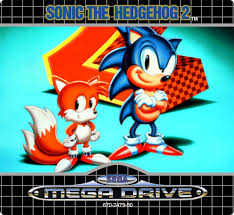
Sonic 2 introduced Tails, Sonic 3 would add Knuckles, Sonic CD would bring Amy. Now there’s like thirty more clogging things up.

Sonic games were like an adrenaline rush. It was both exciting and nerve-racking to have Sonic zipping along at top speed knowing at any moment an enemy could pop out or a spike pit could be looming. Besting the levels was one part reflex and another part repetition. There was an element of trial and error to Sonic that rarely become frustrating. Sonic was also a single player game, but Sonic 2 would introduce the character Tails and shoe-horn cooperative play into the game. As player 2, Tails was not fun to control because the game followed Sonic and only Sonic with Tails often getting left behind off camera. He couldn’t die, so that was a plus, but he didn’t really bring anything to the gameplay experience. Players could elect to control Tails and only Tails, but he was basically just a palette swap of Sonic, only cuter. Sonic 3 would improve on the co-op dynamic by allowing players to control Tails in flight. He could lift Sonic to hard to reach places which made the Sonic and Tails adventure a little different from the Sonic solo mode.

Sonic the Hedgehog 3 and its sister title, Sonic & Knuckles, probably represents Sonic’s peak as well as his fall. The game became bigger and introduced a new character, Knuckles the echidna (whatever that is) who could glide and climb walls with his spiny knuckles. He was an antagonist in Sonic 3, and a playable character in Sonic & Knuckles. Sonic 3 was a big game compared to the previous titles. There was more emphasis placed on exploration which slowed things down just a touch. The graphics were also overhauled and allegedly Michael Jackson was responsible for most of the soundtrack. It was also meant to be bigger, as Sonic 3 and Sonic & Knuckles were supposed to be one game, but Sega likes money so it rushed the game to market. Sonic & Knuckles was the only game to feature Sega’s lock-on technology which allowed players to attach the prior Sonic games to the cart in a pretty ingenious maneuver. For Sonic 2, this meant gamers could play as Knuckles for a new take on things. For Sonic 3, this essentially opened up the whole game and allowed for saving as well which finally made collecting those pesky chaos emeralds worthwhile.

250px-SatAMtitle

Sonic wasn’t content to dominate just games, he had to have television too.

While this was all going down, Sonic was also succeeding elsewhere. On television, The Adventures of Sonic the Hedgehog was airing on weekday afternoons. Featuring everyone’s favorite nerd Jaleel White as the voice of Sonic, the show was a pretty typical children’s cartoon with cool protagonists and dim-witted villains. On Saturday mornings, a separate Sonic cartoon, simply titled Sonic the Hedgehog, was airing on ABC. It too featured White as the voice of Sonic but this show struck a more serious tone. Robotnik was the antagonist seeking to “robotocize” the population and succeeded in doing so with Sonic’s beloved Uncle Chuck in the first episode. Sonic was joined by Tails as well as a cast of character not featured in the games. Together they referred to themselves as freedom fighters and often employed guerrilla tactics to stop Robotnik and slow his progress. It was actually a pretty cool show, and both looked and sounded better than Adventures and the serious tone helped make it stand out. It doesn’t quite hold up for adult viewing, and Sonic for some reason needed to have a food obsession (chili dogs) like a certain group of turtles, but it’s still a pretty interesting interpretation of the games. Also of note, is Sonic’s solo adventure for the ill-fated Sega CD peripheral. I covered that in a full review years ago but it’s often heralded as Sonic’s best outing, it’s just too bad so few got to play it since the Sega CD was both pricey and awful.

Together with Sonic, Sega was able to claim a partial victory, though not a resounding one, in the 16 Bit Wars, but victory would be short-lived. Sega hastily tried to bring Sonic into the third dimension with Sonic 3D Blast, a dreadful top-down platformer released on the aging Genesis and ported to Sega’s new console. The industry moved on and Sega tried to stay one step ahead of its rivals with the Sega Saturn, a CD based system ill-equipped to handle the demands of 3D processing. The Saturn quickly fell behind not only Nintendo and its Nintendo 64, but also new-comer Sony and its Playstation. And in a truly puzzling maneuver, Sonic never had a true outing for the Saturn. He would skip the whole console generation while his old rival Mario wowed industry insiders and gamers alike with his performance in Super Mario 64. Sonic would not receive a full-fledged outing until Sonic Adventure in 1999 for the Sega Dreamcast.
Unknown-37

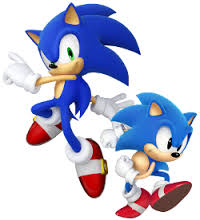
If we want to be positive about Sonics more recent adventures, Sonic Generations wasn’t too bad.

Sonic Adventure was the hedgehog’s proper introduction to 3D and the results were a bit mixed. People at the time seemed to be pretty delighted with the return of Sega’s mascot, and the game looked great. The title was a hit and helped get the Dreamcast off to a decent start, but the momentum died quickly as the shadow of the Playstation 2 loomed large. At that time, people seemed willing to overlook Adventure’s short-comings, namely the giant cast of characters that forced non-speed related gameplay into the mix, but they were less willing to do so when Adventure 2 arrived in 2001. Most agreed that playing as Sonic was still fast and still fun (and newcomer Shadow played exactly the same), but 2/3rds of the game was devoted to scavenger hunts as Knuckles/Rogue and mech battles as Tails/Eggman. Those slower segments were mostly panned, and rightly so. This is about the time people started yearning for Sonic to go back to his roots.

There was a brief reprieve for Sonic via Nintendo’s Gameboy Advance. By now, Sega had folded as a console manufacturer and turned to publishing its games on other systems. This helped to land Sonic on handhelds where he was free to be himself. A series of games on both the GBA and the Nintendo DS were mostly well-received, if not spectacular. Simultaneously, Sonic continued to spin his wheels on the home consoles. Games like Sonic Heroes, Sonic Unleashed, and Sonic and the Black Knight were mediocre to just plain awful. Sega seemed willing to try everything and anything with Sonic, and few times did it work out.

Meanwhile, Nintendo has mostly kept its star happy with quality main titles. Yeah, Mario has been whored out to the dreaded spin-off more times than can be counted, but the main titles in the Mario franchise have mostly been great. I’m talking about games like Mario Sunshine, Galaxy 1 and 2, 3D Land, and so on. Sonic has even struggled when going back to the well with 2D as Sonic the Hedgehog 4 was a pretty big bummer of a game. Sonic’s brand and reputation has been so tarnished that it’s now a surprise when he stars in a legitimately good game.

Unknown-36

Archie, which has seemingly never stopped believing in Sonic all these years, is celebrating his 25th in style. Odds are their comic will be better than whatever piece of crap game Sega offers up.

So what is Sonic’s legacy? Is Sonic one of the most beloved characters in video game history? A symbol of quality and excellence on par with the rival he will be forever linked with? Or is Sonic more of a flash in the pan; a product of the times that failed to adapt with the changing tastes of the masses? Is Sonic the video game equivalent of disco? When I think of Sonic the Hedgehog I’m taken back to many days and nights with my Genesis. I remember playing the original title at my nana’s house and running out of the bedroom announcing to all of the adults that I had finally beaten the game. I remember seeing Sonic transform into Super Sonic for the first time while playing Sonic the Hedgehog 2 and being totally captivated. I remember days spent mastering the bonus stage of Sonic 3 in my quest to collect all of the chaos emeralds so I could experience Super Sonic in that game (I also remember doing the same with Tails hoping to uncover a Super Tails, I was very let-down with the end result). That’s the Sonic I choose to remember. Thankfully, I haven’t had many extended experiences with the modern titles, or even the modern cartoons like Sonic X and Sonic Boom. I still know Sonic’s brand has suffered irreparably. I loved Sonic when I was 10 and I imagine most ten year olds today think he sucks, and it would be hard to argue with that. This year marks the 25th anniversary of the original Sonic the Hedgehog, and Sega is reportedly planning some big announcements. Hopefully they focus less on the glitz and just make a good game already. Sonic can’t take much more of this.

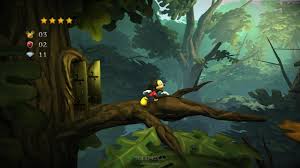
Castle of Illusion Starring Mickey Mouse (2013)

250px-CastleofillusionremakeWhen I was a kid Mickey Mouse was a pretty big video game star. He was always known first and foremost as the official mascot for Disney and its theme parks and for the many cartoons featuring his likeness but he was a frequent star in several video games across multiple consoles. As was often the case back then, Mickey had a different franchise for each of the major consoles. The Sega consoles featured the Illusion series while the Super Nintendo had the Magical Quest games as well as some adventure games for the NES. As the 90’s wound along Mickey started appearing in the same game on both consoles before moving onto the newer machines. Since then his appearances have been cut down, with the Epic Mickey franchise sort of representing a return for Mickey. Even though Mickey was in many games, he never did acquire the reputation of Mario or Sonic (before his reputation was ruined, anyways) and one would be hard-pressed to argue that any of his games were among the best of the era. What they were was usually entertaining and pretty solid.

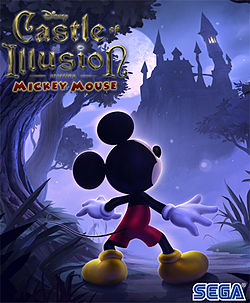
Mickey was basically a B+ video game star with his hits and misses but his best franchise was probably the Illusion series which appeared on Sega consoles. Developed by Sega, these games were often featured on the Genesis and Game Gear retail boxes as signature games for the consoles. The first was Castle of Illusion and was released for the Mega Drive/Genesis in 1990 with a Game Gear and Master System version to follow in 1991. It starred Mickey as he tried to navigate his way through a castle in order to save his beloved Minnie from the witch, Mizrabel, who was basically the witch/queen from Snow White. A sequel titled Land of Illusion was released for the Game Gear and Master System in 1992 with another sequel to follow on the Genesis titled World of Illusion later that same year. World of Illusion was unique because it starred both Mickey and Donald and featured two-player simultaneous play. Its controls and visuals also represented a noticeable upgrade over the original title and its often viewed as the best of the series.

Castle of Illusion, being an early Genesis title, is somewhat crude by today’s standards. The game’s visuals were never stellar and today they’re almost downright ugly. Mickey has a very jagged, squished look and there isn’t much being animated on him. He’s very sluggish to control and the whole game has kind of a sleepy feel. Still, as an early platformer for the Genesis, it was mostly well received because there wasn’t an obvious Mario clone at the time for the Genesis. Last year Sega released a remake for the Playstation 3 and Xbox 360, and that’s really what this review is about.

The original game was okay looking at the time, but its grainy visuals and squished Mickey haven't aged well.

The original game was okay looking at the time, but its grainy visuals and squished Mickey haven’t aged well.

The 2013 version of Castle of Illusion obviously features greatly enhanced visuals when compared with the original. Mickey looks pretty great and the game is an above average looking title for its respective consoles. It isn’t mind-blowing, but is pleasant. The game mostly follows the same path as the original though it does introduce a castle hub world from which Mickey can access the various levels in the game. It’s a little longer than the original, and the levels are a bit different in spots, but for the most part it’s a pretty faithful remake with better graphics. Sega opted to confine Mickey to a 2D plane when navigating the levels but the boss fights usually occur in a 3D environment, which gives them a different feel when compared to the original game. For the most part, I found the boss fights harder in this game than I did on the original cart while the actual stages might have been a tad easier, with some exceptions.

Unfortunately, Sega did not opt to address what is probably the original game’s biggest short-coming and thats the controls. Mickey is still very floaty and very slow. It took me awhile to get used to Mickey’s timing and early on I had difficulty navigating the easiest jumps as a result. Eventually I got used to it but that doesn’t mean I ever fell in love with it. And these floaty controls get to suck more this time around because Mickey has a third dimension to contend with. Easily the most frustrating point of the game for me was the candy level where Mickey has to jump across floating cookies in a milk river. I felt like I was really fighting with the game to get Mickey onto those cookies and I came close to shutting the game off, but managed to persevere. Some of the collision detection is also confounding, particularly with the game’s second boss the Jack-in-the-Box. I found his boxing glove attack was inconsistent. I basically did the same thing for each attack to avoid it, only sometimes it worked and sometimes it did not. I could never tell what was different as every time it looked like Mickey was basically jumping on top of the glove. The final boss is a little annoying too as she attacks with these ghost things that have a green aura around them making it tough to distinguish between the aura and the ghost (which is also green).

The remake mostly goes for a 2.5D approach and looks well enough for a download only release.

The remake mostly goes for a 2.5D approach and looks nice enough for a download only release.

Castle of Illusion is currently free for Playstation Plus subscribers, which is how I experienced it. My free membership expires this week hence why I didn’t shut it off as I wanted to beat it. I downloaded it mostly because it was free, but also because I had some nice memories of the original and wanted to see what Sega did with it. The original game comes with the download and I can safely say that the remake is probably the better game, though it’s also more frustrating. I can’t really recommend it unless you really loved the original game or have a Playstation Plus membership and can check it out for free. It’s a short game and I managed to beat it in an afternoon. The production values are actually pretty nice and the game’s soundtrack is actually better than I remembered (though I kind of prefer the original game’s old school score). The plot basically exists just because it has to and you’re not going to play this to see what happens to Mickey and Minnie, but I suppose that’s better than nothing. Hopefully Sega and Disney made some money off of this remake and a World of Illusion remake is in the cards. That’s a game I’d pay money to play again.


Ranking the Mario Games – Part 3

Part 1

Part 2

This edition of ranking the Mario games is going to be slightly different than the two previous ones.  In trying to summarize each game in my previous posts I tried to keep it to one paragraph, which lead to some really long paragraphs.  One paragraph is fine for the lesser Mario outings, but now as I enter the top 5 one paragraph seems like too few, so this post will capture the titles I ranked from position five to three, with one more post to follow for the top two.  This way I can elaborate more on each individual title and attempt to give each game the time it deserves.  These games are some of the best of the best, and while I feel very strongly about their position in the top five, it’s debatable how each should be ranked amongst each other, but that’s what makes these things so fun.

5. Super Mario Galaxy 2 (2010, Nintendo Wii)

Yoshi is the major selling point of Super Mario Galaxy 2.

Yoshi is the major selling point of Super Mario Galaxy 2.

Super Mario Galaxy 2 might be the favorite Mario game for some people, or a lot of people, and with good reason.  It falls to position five on my list not for quality but more for redundancy.  Super Mario Galaxy felt like a revelation while Galaxy 2 felt like a continuation of that game.  In a way, it’s Super Mario Galaxy’s Lost Levels.  That’s not to say it was entirely the same, as there are some obvious additions to the formula, just not necessarily worthwhile.

The premise of the Galaxy series of games takes Mario into space aboard a ship that serves as a hub world.  From there, Mario enters various levels that play out over a map similar to Super Mario Bros. 3, or more recently, New Super Mario Bros.  The levels themselves range in size, and the setup is similar to Super Mario 64 in that the game asks the player to re-play each level to collect stars by beating it in a specific manner.  Sometimes replaying the levels opens up larger parts while other times it just tasks Mario with a new objective in the same setting.

As with any new Mario game, new power-ups have been added to differentiate from prior games.  For Super Mario Galaxy 2, we have Cloud Mario, Rock Mario, and the Spin Drill.  Cloud Mario allows Mario to create cloud platforms to utilize to reach higher areas or cover wider gaps.  Rock Mario is basically a wrecking ball that powers through areas and certain pieces of the environment.  The Spin Drill isn’t a suit, but an object Mario can grab and use to drill through an entire level, emerging on the other side.  All three are kind of neat, but none are exceptional when compared with some of Mario’s other abilities.  The ice flower from the first game does not return, nor does the flying star, but Bee Mario is still around as are the other power-ups from Super Mario Galaxy.

Even though the more powerful Wii U console boasts a Mario title of its own, Galaxy 2 remains the best looking Mario game to date.

Even though the more powerful Wii U console boasts a Mario title of its own, Galaxy 2 remains the best looking Mario game to date.

The other major addition, and the one promoted right on the box, is the return of Yoshi.  Yoshi is more advanced than ever in Super Mario Galaxy 2 as he’s more than just a second power-up.  His tongue, controlled using the Wii remote’s pointer, can not only consume enemies from afar, but also trigger switches or be used to swing across gaps.  He can still flutter jump and give Mario a boast to his jumps, but he also has power-ups of his own that bestow special abilities for a limited time.  There are three fruits that do this:  a dash fruit, bulb fruit, and blimp fruit.  The dash one (actually dash pepper, making it a vegetable, I suppose) lets Yoshi dash at a high speed.  While dashing he can run up certain walls and across water.  The bulb fruit makes Yoshi glow and shows up primarily in Ghost Houses to illuminate pathways.  The blimp fruit is like the P Balloon from Super Mario World, only with the helium effects taking place on Yoshi this time allowing him to float through the air while Mario hangs on for dear life.  Of the three, the bulb fruit is the most conventional in that it doesn’t affect how Yoshi handles.  The dash pepper makes Yoshi dash almost uncontrollably and it can be a challenge to negotiate the various obstacles in the way.  That’s likely the whole point of the thing, but I never found it enjoyable.  I also loathed the P Balloon in Super Mario World, mostly thanks to the infamous Tubular special world, so blimp Yoshi does little for me.  Controlling Yoshi without the power-ups is infinitely more enjoyable, but few Yoshi levels don’t include a power-up of some sort.  And as you can probably guess, Yoshi is only usable in certain levels.

Super Mario Galaxy 2 does score points over its predecessor by being the more challenging of the two.  Getting to the final battle with Bowser is a moderate challenge, but the extra levels and special stars can be exceptionally difficult.  It tends to be challenging without being overly frustrating, though the hardest level in the game may drive you to break a controller or two.  Super Mario Galaxy 2, disappointing power-ups aside, is a marvel of game design that basically gave gamers more of what they wanted.  I personally found the original title more enjoyable as it was more new and I found some of the challenges less annoying (though both games contain balance ball levels, the shoe-horned Wii remote feature that most could do without.  And Spring Mario).  Every fan of the 3D Mario games should have this one in their library though, as should anyone who thinks modern Mario titles are too easy.

4. Super Mario 64 (1996, Nintendo 64)

Running through the early stages of Super Mario 64 was a kind of joy I can't begin to describe.

Running through the early stages of Super Mario 64 was a kind of joy I can’t begin to describe.

If you’re someone who grew up with a Gamecube or Playstation 2 as your first console, then you cannot possibly understand what it was like to play Super Mario 64 for the first time in 1996.  It only took a moment for Super Mario 64 to blow you away and convince you that you were playing something special.  It arrived at a really interesting time with Nintendo taking a backseat to Sega and Sony in getting its new hardware to market.  Sega’s Saturn never set the world on fire due to its hefty price tag and lacking software, but Sony’s Playstation was winning gamers over worldwide with new franchises and old, proving once and for all that a CD-ROM based console could work and work well.  Sony had even won Nintendo staples like Final Fantasy, and up till now it seemed like Nintendo was just going to stand and take it.  Then the public got a glimpse of the Nintendo 64.  Sure it was kind of plain looking and still boasted a cartridge medium, but with promises of 3D Mario and Zelda people were convinced it would succeed and the pre-orders came pouring in.

At this point in my life I felt I had “outgrown” Nintendo and the prospects of playing a new Mario game didn’t excite me in the least bit.  My first experience with the console should have been totally unremarkable as it occurred at a Toys “R” Us prior to the system’s launch at a demo kiosk.  It couldn’t have lasted more than ten minutes, and was maybe closer to five, but I remember it so well because of how incredible it felt to control Mario in 3D for the first time.  There was nothing like that currently available anywhere, and seeing Mario run around such an immersive world was shear joy.  The game was inherently fun, and I felt like I could have just run around in that first stage for hours.  I remember after playing it I went to the Saturn kiosk and tried the upcoming NiGHTS and frowned at the pixilated visuals.  Sony was demoing its Mario adversary, Crash Bandicoot, who’s commercials ended up being more fun than his games.  I probably tried to convince myself that Crash was superior, and that Mario was too kiddie, but deep down I knew I had just experienced the future.  The game was such an experience that I feel kind of stupid for not ranking it number one, though I know as I write about the games to follow I’ll feel better about my decision.

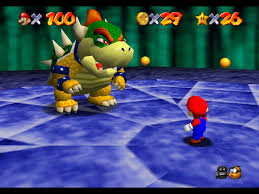
Bowser was very big, though not exactly frightening.

Bowser was very big, though not exactly frightening.

Years removed and numerous star challenges completed, I can still say that Super Mario 64 is an exceptional game, even if it’s imperfect.  Super Mario 64 was the first true attempt at a 3D platformer and it’s still the core of what all the games in the genre still follow, especially future Mario titles.  For the first time, Mario could jump, double jump, and triple jump his way to Bowser and free the princess.  Familiar foes returned like the goomba and koopa troopa, while new power-ups and locations were unveiled.  Super Mario 64 felt unique not just because of the new interface, but by creating its own world.  Traditional power-ups like the super mushroom and fire flower were absent from the game with Mario now having a life meter for the first time.  Mario could no longer breathe underwater or ride Yoshi or even partner with his brother Luigi.  There was more emphasis on exploration and uncovering hidden challenges and levels. Beating a stage once awarded Mario with a star and opened up additional challenges in the level.  To proceed further in the game Mario needed to collect a set amount of stars to face Bowser for a final time.  And for the first time, Bowser truly towered over Mario.  Looking more like a turtle than ever, it was intimidating encountering Bowser and also fairly challenging as the player needed to position Mario behind him in order to grab his tail.

The game was so flashy and new that many seemed to ignore the few areas it fell short, while time has made them more apparent.  As was the case with seemingly every 3D title from this era, the camera can be problematic and there will be times where the player is forced into making a leap of faith hoping there’s a platform out of sight.  And while controlling Mario in wide open spaces is a breeze, negotiating platforms and narrow ledges is less so, and there’s a reason why Mario hasn’t been able to punch and kick enemies following this game.  And other than the wing cap, the power-ups were decidedly un-fun, and no Luigi seems like borderline blasphemy.  In short, the Mario titles to follow were clear improvements on the interface enough to overcome nostalgia.  Or rather, I should say one title in the 3D Mario universe is clearly superior, though if someone held a gun to my head I might opt for Galaxy 2 over Super Mario 64, but that’s all right.  Here, nostalgia counts for something which puts Super Mario 64 at a strong number four on my list.

3. Super Mario Bros. 3 (1990, Nintendo Entertainment System)

The map layout common to many Mario games originated with Super Mario Bros. 3.

The map layout common to many Mario games originated with Super Mario Bros. 3.

It took me a long time to admit to myself that Super Mario Bros. 3 was no longer my preferred Mario game (and no, it’s not number 3 on my list because that number appears in it’s title), which is a testament to just how great it is.  I still consider it amongst the most highly anticipated video games of my lifetime.  Following the rather odd Super Mario Bros. 2, I think most people were excited about returning to what felt like the more traditional style of Mario games.  And knowing Mario was going to be able to fly was the kicker.  The game came out in 1988 for the Famicom in Japan, so US gamers had to endure nearly two years of screenshots in Nintendo Power (and a cameo in The Wizard) before getting to play the game, but it was worth the wait.

Super Mario Bros. 3 was the true sequel to Super Mario Bros. and the clearly superior one at that.  It was everything the original game was times 100.  It looked better, Mario and Luigi felt better (they could now slide down slopes and carry koppa shells), and the worlds of the game were so much more immersive and fun when compared to the original.  It felt huge having eight worlds with each map seemingly larger than the one before it.  It starts innocently enough with World 1 and its clear path to the castle.  Then World 2 stretches to a second screen, while World 3 has Mario sail across the map.  World 5 is basically two maps with one hidden from view at the start.  The game was always throwing new things at the player, especially when it came to the power-ups.

Super Mario Bros. 3 is remembered for a lot of reasons, but mostly it's for the power-ups.

Super Mario Bros. 3 is remembered for a lot of reasons, but mostly it’s for the power-ups.

Super Mario Bros. 3 can be credited as the game that really took the various power-ups to a new level.  It’s still the game I use as a measuring stick when evaluating all of the new and old abilities Mario acquires in his latest games.  The super leaf was the major and much hyped new ability which gave Mario a raccoon tail and ears and let him fly.  We excused the ridiculousness of the whole thing because, after all, MARIO COULD FUCKING FLY!  It blew my little mind that Mario could soar through the air like Superman.  It might seem like such a small thing younger gamers today, but it really was unheard of at the time.  The first time I laid eyes on Super Mario Bros. 3 it was all I wanted to see, just show me Mario flying so my head could finally wrap itself around the idea.  It didn’t just end there, of course.  World 3 introduced the frog suit which made swimming fun for the first time.  The water levels are kind of that thing we all overlook (except when it comes to the first Teenage Mutant Ninja Turtles game), but we all kind of secretly hate them.  The frog suit was a needed addition, even if trying to hang onto one through the land-based levels was a chore as Mario could only run in the suit if he was carrying a koopa shell.  The tanooki suit in World 5 was a cuter take on the super leaf, but it did allow Mario to turn into a statue and avoid damage, a deceptively useful tool.  World 5 was also the world that held the one stage (5-3) everyone remembers for the Kuribo’s Boot, a green boot Mario could steal from the goomba’s in the level and pound his way to victory.  The hammer bros. suit was the most sought after though.  Found in World 7, it was a more powerful take on the fire flower and most players would hang onto it until the final showdown with Bowser.

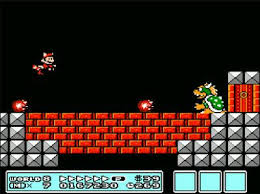
Now Bowser really has to contend with a "Super" Mario.

Now Bowser really has to contend with a “Super” Mario.

Super Mario Bros. 3 also introduced a lot of enemies that became staples of future titles.  The koopa kids made their first appearance as did the boo ghost and variations of the hammer bros. like the boomerang bros. and fire bros.  The airships were introduced for the first time and various mini games dotted the maps along with Toad Houses where power-ups could be found.  Mario and Luigi could also store power-ups for later use that could be activated from the world map.  Fortresses appeared and toppling them were necessary to reach the final fortress in each level.  The magic whistles replaced the secret warp zones and acquiring all three was the quickest way to reach the final stage.  With no game save feature, they were almost necessary for beating the game as the game was almost too big for on session forcing many gamers to leave their NES on all day to save their spot.

For the most part, Super Mario Bros. 3 is just a really fun game that keeps throwing new things at the player the further into the game they go.  It’s scope felt epic back in 1990, and it truly is the ultimate 8-bit Mario title.  Really, the only thing the top two games on my list succeed over it is with level design, but even they owe a lot to Super Mario Bros. 3 which really paved the way for all of the Mario games to follow.  It’s, simply put, among the greatest games ever made.


Crisis of the Wii U

images-104It seemed like it happened overnight, the toppling of the Nintendo era of dominance.  I don’t even know when it happened.  The NES obviously dominated the 80’s and the SNES basically dominated everywhere except the US where it was neck and neck with Sega’s Genesis.  Actually, the turning point may have come during that era when a little game called Mortal Kombat was released to home consoles in 1993.  Mortal Kombat, as most are likely aware, was a fantastically bloody affair and something Nintendo didn’t want on its machine.  Sega, on the other hand, was willing to accept the title and all its gore so long as it was blocked by a password (the incredibly easy to administer A, B, A, C, A, B, B).  I know, for me, it was that game that made we want a Genesis, and after I got one, I never bought another SNES game.

It seems like ever since Nintendo has been up and down.  While Sega would vanish from the console business, new competitors Sony and Microsoft were next to challenge the Nintendo empire and have been very successful at doing so.  Nintendo’s next two consoles failed to lead the market, but with the release of the Wii the company came storming back.  Underpowered but also underpriced when compared to its competitors, the Wii was able to gain a large market share with it’s unique motion-based controls.  The party nature of the console helped it surge to a huge lead and the head of the market.  Because of the hardware within, it didn’t take long for the limitations of the console to show itself and it became clear that Nintendo would have to be aggressive in releasing its next console if it wanted to maintain its share of the market.  Enter the Wii U, the similarly named successor boasting a new gamepad.  With a modest price point and familiar interface, it seemed Nintendo was poised to hold onto its Wii consumer base for a while longer.  Not so fast.

No decapitations for you, Nintendo fans.

No decapitations for you, Nintendo fans.

The first stumbling block for the Wii U relied in the marketing.  Which is to say, there wasn’t a whole lot.  The labeling of the console, and perhaps even the look, have lead to consumer confusion as some people weren’t clear on if the Wii U was a new console or just an add-on for the outdated Wii.  When a big portion of a console’s consumer base is described as casual, this is the kind of thing that happens.  The next obstacle is what’s under the hood.  The Wii U is a boost over the Wii but it’s not clear if the machine is more powerful than existing consoles from Microsoft and Sony.  This has lead to a feeling that the Wii U isn’t really a “next generation” machine and the hardcore gaming crowd hasn’t been convinced that this is a must own console.

Perhaps the biggest contributor to the Wii U’s lukewarm reception has been the inability of Nintendo to convey how innovative the gamepad is.  The jury is largely still out on if it’s a worthwhile addition to home gaming.  The Wii U launch lineup was actually pretty solid, especially when compared to the lackluster launches of other recent consoles.  The Wii U even had a Mario title at launch, the first Nintendo console to have such since the N64.  The problem with it though is that it treats the gamepad as an afterthought.  If Nintendo wanted to set the world on fire it needed to launch the system alongside a game that truly made good use of the gamepad.  Nintendoland just wasn’t enough.  And even though the Wii wasn’t blessed with an abundance of third party support, at least there were a few out there that seemed excited by the movement based controls.  With the Wii U, a big company like EA already looks to have abandoned it and that, regardless of how you feel about EA and its games, is not a good sign.

Another, perhaps unforeseen, hurdle is the proliferation of casual gaming on tablets and cell phones.  Nintendo was able to tap into this growing audience with the original Wii, but is it possible this group has already moved on to other things?  The gamepad is quite similar to a tablet, or it is at least easy to perceive why someone would have that impression, and these gamers may wonder why they would ever need a Nintendo tablet.  And with no major showings of games on the horizon, the more hardcore gaming community has been given little incentive to get a Wii U beyond some empty promises and HD remakes of old games.

If you’re a regular reader here, then you may know that I have been an early adopter of the Wii U.  Since buying the deluxe version on launch day I’ve added one game to my collection, Scribblenauts Unlimited, a solid title but one that is also available on the 3DS.  I currently have no idea what my next Wii U game will be because nothing has been announced or shown that is even remotely interesting.  And with Nintendo announcing that they will not be holding a press event at E3 this year it makes me nervous that there’s very little to show.  I worry that Nintendo really needed to make a splash with the Wii U, and by failing to do so, have doomed the console already.

It's coming...

It’s coming…

I have been an early adopter for three recent consoles with the 3DS and Playstation Vita being the others.  The 3DS struggled early before rebounding while the Vita is still a source of concern for Sony.  Even so, I never regretted my 3DS purchase and I have yet to regret my Vita one but I pretty much already am regretting my Wii U purchase.  I know that eventually Nintendo will get some first party software onto the Wii U that will be worthwhile, but how many such games can Nintendo reasonably release?  And will any third party developers step up and release anything of note for the Wii U?  Right now, those developers can still release current-gen ports to the Wii U, but once the more powerful PS4 and next Xbox arrive that may be out of the question.  The console is unique enough that developers basically need to cater to it, but if sales are lagging as bad as they currently are then no developer will be willing to take that risk.  Will the Wii U be the console that takes Nintendo out of the hardware business?  My heart says no, but my brain is at least willing to entertain the notion.


Catching up with ESPN NFL 2K5

images-72It used to be that the world of sports video games was a free-for-all.  While various movie, television, and comic book licenses were sold off to developers, seemingly anyone could produce a football, baseball, basketball, or hockey title and pony up the dough to get a professional league’s endorsement of their product.  Before that happened though, publishers had to first find out there was value in that.  It used to be that most sports games were just about the sport.  Most of the games on the NES and before were just called Baseball or Football while other publishers would get a little more creative and gives gamers a title like Blades of Steel.  Eventually publishers saw the value of marketing with star power, but before they went the route of acquiring full league licenses they tried the marque player route that put Larry Bird on our 2600.  I don’t know what the first game to get a full league license was, but I do know that the first one I played was World Series Baseball on the Sega Genesis.  All of the teams I was familiar with were now present as were the different players.  Licensing agreements between leagues and their respective player’s unions made this possible (even though some mega stars liked to opt-out of these agreements and annoy gamers throughout the country; I’m looking at you, Michael Jordon) and sports games became more authentic as a result.  This was the status quo for a long time and for some leagues it still is.  For football though, that’s no longer the case and hasn’t been for a long time.

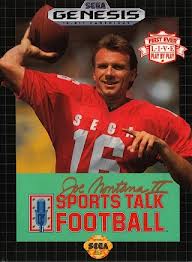
This was basically the cover of every sports game pre 1994, just swap out the athlete with another.

This was basically the cover of every sports game pre 1994, just swap out the athlete with another.

EA Sports has been the king of the virtual football world for a long time now.  Originally Tecmo held that honor with its popular line of Tecmo Bowl games but when those failed to evolve EA, partnered with John Madden, stepped in.  EA’s games thrived during the 16 bit era, especially on the Genesis which performed exceptionally well in the United States.  There were other competitors, most notably Acclaim and eventually Sony’s 989 Studios, but Madden was generally regarded as the best.  When EA announced that it would not support Sega’s new Dreamcast console it was a mighty blow to the doomed machine.  Sega had more or less won the 16 bit wars with sports titles but now found itself without its star general.  Sega did what only Sega could do:  develop its own NFL game.

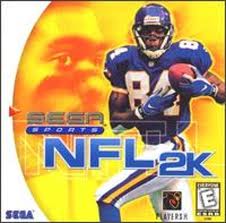
Visual Concepts and Take-Two Interactive led the way with the inaugural NFL 2K in the late summer of 1999.  Sega showed off an impressive demo at E3 earlier that year that had caught the eye of many gridiron gamers but few really expected Sega to deliver a game in its inaugural year that was worthy of challenging Madden.  Sega had put out a few football titles on the Genesis but making a football game in the 3D era was totally different. The naysayers were proven wrong as NFL 2K was a critical and commercial success for the fledgling Dreamcast, and even though it wouldn’t be enough to save the console, it proved worthy of hanging around.  It’s timing was perfect too as Acclaim’s Quarterback Club was growing stale, and 989’s NFL Gameday had completely fallen off.  Madden was left to run unopposed for the most part, and needed a worthy adversary to prevent it from sharing the same fate as its vanquished foes.

Though it may be hard to imagine today, Madden was mostly geared towards casual players back then.  The game was at its best, and most fun, when dropping back to launch a deep ball down the sideline to Moss.  No longer confined to the world of two-dimensional sprites, Madden was fully realized in 3D but the oddly proportioned and stiff animating player models left something to be desired.  NFL 2K was the shiny new muscle car parked next to the Madden station wagon.  It was faster, leaner, and more explosive.  Running the deep post with Moss was now even more fun than it was before, and things like running the ball and rushing the passer no longer felt like chores between pass plays.  Madden wanted you to have fun, NFL 2K wanted you to experience NFL football.

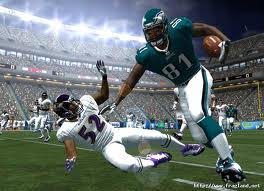
Go ahead, try and stop him.

Go ahead, try and stop him.

The debut game was not perfect, and a lot of the front end needed some polish, but the presentation shined in other areas.  Commentary from the fictitious duo of Dan Stevens (Terry McGovern) and Peter O’Keefe (Jay Styne) felt vibrant and alive even without the name recognition.  A sports ticker scrolled by to update the player on other games and replays were used judiciously.  When dropping back to pass, the player no longer had to call up the button assignments for receivers, they were already present.

Visually, the game was a tour de force when compared with Madden.  Madden did a good job with player faces, but 2K topped them everywhere else.  They were better proportioned, but mostly they just plain moved better.  Madden was always stiff and steering a running back thru the defense felt like steering a boat.  In 2K, players were quick and cutting left and right.  When the gap between blockers was minimal they turned their bodies to squeeze thru the tiny hole.  When the ball was in the air receivers would leap over defenders if they had to in order to pull it down while a tiny scat-back would get blown up if trying to truck a stout middle linebacker.

Playing the game was also fast and just generally more entertaining.  Passing the ball was a true blast as so many weapons were made available to the player.  Quarterbacks were not restricted to the play called as far as how the ball would travel thru the air.  If the player wanted to lob it, he could.  If he wanted to put a little extra mustard on the throw to zip it into tight coverage, he could.  Maximum Passing meant players could intentionally under or over throw targets with a flick of the analog stick.  Have an agile receiver running outside with a corner over him?  Under throw him so only he has a play on the ball.  Have a tall receiver streaking towards the back corner of the end zone?  Take advantage of his height and toss it up.  He may not come down with it, but neither will the defender.  Knowing how to pass the ball to each receiver is a must for continued success.  If your stone-handed blocking fullback is open in the flat it’s best to lob him a softy than toss him a bullet that will probably bounce of his face-mask.  Knowing your personnel is equally important in the running game as scat-backs like Warrick Dunn are not likely to find much success between the tackles.  Get those guys in space where they can spin and juke their way to pay-dirt and leave the stiff arms and truck maneuvers for the likes of Mike Alstott.  NFL 2K also proved that defense could be fun.  Playing the line and rushing the passer was a game of cat and mouse.  You may find initial success with a certain technique but offensive lines will adapt and double you if necessary.  Playing in the secondary and trying to stick to a receiver was extremely difficult and only for the true pros, but hanging back and making plays on the ball with a safety was both rewarding and fun.

NFL 2K was here to stay, and though Madden routinely topped it in sales, EA wasn’t pleased to have legitimate competition.  EA was especially perturbed when 2K5 (now dubbed ESPN NFL football) was released for only 20 bucks.  This was the last straw and soon EA locked up the NFL license (along with the NCAA, Arena League, and others) and basically put an end to Sega’s annual football game.  This was especially unfortunate as 2K5 was a godsend for football fans.

The addition of the ESPN license meant full animated game intros hosted by a virtual Chris Berman.

The addition of the ESPN license meant full animated game intros hosted by a virtual Chris Berman.

Earlier games in the series had their own issues.  Not all would be solved but by the time 2K5 came around a lot of them would be.  Earlier games featured an over-powered run game.  Perhaps VC and Sega really wanted to make running the ball as fun as passing, but by making it so effective they messed up the balance.  Changing the blocking patterns and playing up to the difference in backs (power vs finesse) helped to solve this.  The dreaded suction-blocking was also less of a problem come 2K5.  Suction-blocking is a fan-coined term that described the game’s programmed blocking animation that forces a defender to engage.  Even when controlling a defender manually, it was something the game forced upon those who played.  Madden was plagued by it too and would be for some time longer but 2K found a way to nearly eliminate it come 2K5 (though it was still hard to disengage from a blocker).  Earlier games were light on options and Madden seemed to always trump 2K in this department, but 2K5’s franchise mode was quite robust and a series of challenges in the ESPN 25th Anniversary section kept gamers busy.  Other additions, like the virtual Crib and first-person football, were there for those who wanted it but were mostly duds.

ESPN NFL 2K5 is kind of like the NFL equivalent to WWF No Mercy.  A lot of football fans to this day still feel it’s the best of the best.  I was a 2K guy and before the series went multi-platform I rarely played a football game.  Madden never felt right to me, and the most fun I had with a football game was NFL Blitz.  NFL 2K2 was my first taste of the series and I was hooked.  To this day, I’ve only owned two versions of Madden with all coming after the exclusivity agreement.  Neither entertained me as much as 2K5 did, though the inaugural Madden on the Wii did entertain me for quite a while.

Visually, the game is no longer a tour de force but is far from ugly.

Visually, the game is no longer a tour de force but is far from ugly.

With the NFL season winding down, I’ve been going back to 2K5 recently to see how it holds up.  A lot of the flaws I remember still jump out at me.  Lead blockers can be annoyingly dumb.  Perhaps it’s because of the whole suction-blocking thing getting blown up, but a lot of the times a blocking fullback will run right by a blitzing linebacker or defensive end and head straight for the next level.  This does my running back no good since he doesn’t have a chance to get into the secondary when a guy is already all over him at the line scrimmage.  Receivers tend to be too stone-handed with 3 or 4 drops a game from my receiving corps being a common sight.  I know guys are going to, on occasion, drop an easy one but it seems to happen too often.  Defensive backs are also really good in man coverage.  While receivers are not omniscient, they don’t know the ball has been thrown in their direction if they haven’t actually turned to look, corners seem to know exactly when to break off their assignment whether they’re watching the QB or trailing a receiver.  It makes it hard to find the “gimme” completions and even check-downs can be an adventure (why do so many check-downs to backs in the flat or receivers running out patterns result in incompletions?!?).  There’s also the matter of the near game-breaking QB evasion moves initiated by flicking the right stick.  Even statues like Drew Bledsoe can shrug off what looked like a sure sack and as a result I rarely use it because it feels cheap.

Not everything VC brought to the table proved to be a good idea.

Not everything VC brought to the table proved to be a good idea.

A lot of this stuff would be rectified by now as most are AI problems.  And at least it goes both ways.  The CPU will miss out on some easy completions because of receivers that can’t make a clean catch.  And your team will also have some pretty sticky cover guys of its own to roll out.  Since the 2k series was shelved, Madden has adopted a lot of what made the series great including guided passes and placing more emphasis on animations.  2K is still fast though, even compared with the current games, and still a blast to play.  I love approaching the line, checking the coverage, and adjusting the play on the fly.  I wish there were more robust audible options, but the hot routes make the majority of plays incredibly customizable.  If a defender is playing way off the line I’m happy to check into a short pattern and if I notice a corner has no safety help on a speedy receiver I’ll audible to a fly or slant pattern.  The adaptive AI reduces the presence of money plays which dogged older football games.  Sure, most will still have a few go-to plays for certain situations but good gamers will experience the full playbook as opposed to a handful of the same plays.  Few things are as rewarding in gaming as executing a perfect stop-and-go with an expertly timed pump-fake followed by a deep lob over the top.

My head tells me that the recent versions of Madden have likely trumped ESPN NFL 2K5 at this point.  The game came out over 8 years ago so surely it’s been improved upon by now.  My heart though won’t allow me to admit it.  When I play Madden I enjoy it but it doesn’t pull me in.  When I turn on 2K5 for a game I can’t stop at just one.  Not even the dated rosters can dim my enjoyment of this one though it does sadden me that the series was cut down in its prime.  There is hope though as EA’s license agreement with the NFL will expire at the end of this year and it was announced that Take-Two will revive its long-dormant NFL franchise in 2014.  It seems hard to believe that the developers could come in and create an exceptional football game after 10 years without the NFL license, but that just puts Take-Two and Visual Concepts in the same position they were in back in 1999 and we all know how that turned out.